


For CFOs, finance managers, and business owners navigating UAE transfer pricing regulations, understanding Local File requirements is critical to avoid penalties and ensure compliance.
Key Takeaways
- UAE businesses must prepare Local Files if they’re part of an MNE group with AED 3.15 billion+ revenue OR have AED 200 million+ individual revenue
- Local Files must document controlled transactions with non-residents, exempt persons, and entities with different tax rates
- Documentation must be submitted to FTA within 30 days of request and include functional analysis and transfer pricing methods
- All transactions must comply with the Arm’s Length Principle, even if exempt from Local File requirements
Overview of Transfer Pricing in the UAE
Transfer pricing in the UAE refers to the pricing of transactions between related entities within multinational groups. The UAE introduced comprehensive transfer pricing regulations in 2023, aligned with OECD BEPS Action 13 guidelines, to ensure that profits are taxed where economic activities occur and value is created. These rules apply to businesses with significant cross-border related party transactions and require detailed documentation to demonstrate compliance with international standards.
Key Transfer Pricing Principles and the Arm’s Length Standard
The Arm’s Length Principle (ALP) is the cornerstone of UAE transfer pricing regulations. It requires that the terms and conditions of controlled transactions between related entities be consistent with those that would be agreed upon between independent entities under similar circumstances. This principle ensures fair taxation and prevents profit shifting to low-tax jurisdictions.
Practical Application: For example, if a UAE subsidiary purchases goods from its German parent company, the price charged should be comparable to what an independent German supplier would charge an unrelated UAE buyer for similar goods under similar conditions.
Definition and Scope of Related Parties and Connected Persons
Under UAE regulations, Related Parties and Connected Persons include entities where one party controls or significantly influences the other, or where both are under common control. This includes:
- Parent and subsidiary companies (direct or indirect ownership of 50% or more)
- Sister companies under common control
- Entities with common management or significant influence
- Permanent establishments of the same entity
Transfer Pricing Methods Used in the UAE
The UAE recognizes five primary transfer pricing methods, aligned with OECD guidelines:
| Method | Best Used For | Description |
| Comparable Uncontrolled Price (CUP) | Commodity transactions | Compares prices charged in controlled transactions with uncontrolled transactions |
| Cost Plus Method | Manufacturing/production | Adds appropriate markup to costs incurred |
| Resale Price Method | Distribution activities | Subtracts appropriate gross margin from resale price |
| Transactional Net Margin Method (TNMM) | Complex transactions | Examines net profit margin relative to appropriate base |
| Profit Split Method | Highly integrated operations | Splits combined profit based on each party’s contribution |
Transfer Pricing Documentation Requirements Overview
The UAE transfer pricing framework includes four main documentation requirements:
| Document Type | Threshold | Submission Deadline | Purpose |
| Local File | AED 3.15B group revenue OR AED 200M entity revenue | 30 days upon FTA request | Local entity controlled transactions |
| Master File | AED 3.15B group revenue | 30 days upon FTA request | Group-wide organization and operations |
| Country-by-Country Report | AED 3.15B group revenue | 12 months after fiscal year-end | High-level allocation of income and taxes |
| Disclosure Form | AED 200M entity revenue | With Corporate Tax Return | Summary of controlled transactions |
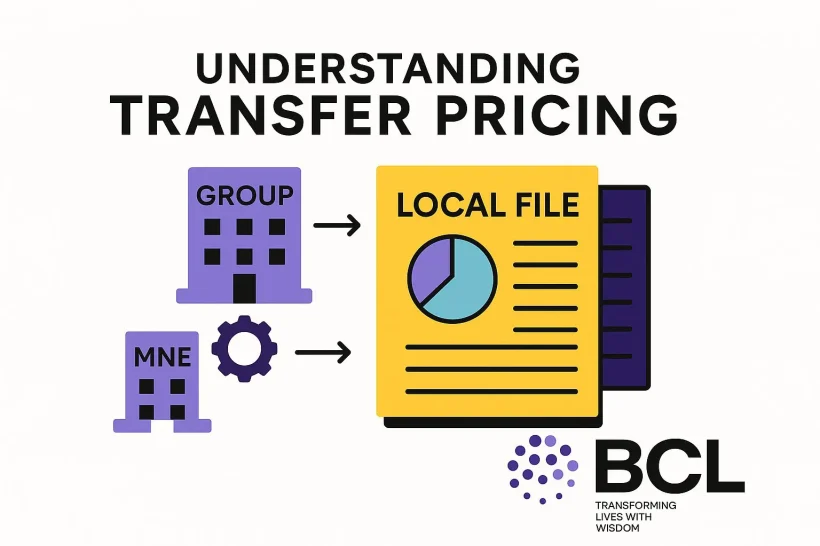
The Local File plays a crucial role in the UAE’s transfer pricing documentation framework. It provides comprehensive details on a taxpayer’s controlled transactions (transactions with Related Parties and Connected Persons) during a specific tax period. The UAE has implemented comprehensive Transfer Pricing (TP) rules, largely aligned with the OECD’s BEPS Action 13, which include requirements for maintaining a Local File. These rules are crucial for businesses with related party transactions to ensure compliance with the Arm’s Length Principle (ALP). Businesses operating in the UAE must prepare and maintain a Local File if they meet either of the following criteria:
- The Taxable Person is part of a Multinational Enterprise (MNE) Group with a total consolidated group revenue of AED 3.15 billion or more.
- The Taxable Person’s revenue in the relevant Tax Period is AED 200 million or more.
Even if these thresholds are not met, all transactions with Related Parties and Connected Persons must still adhere to the Arm’s Length Principle, and taxpayers should maintain sufficient records to substantiate this.
The Local File must include key details, such as:
- Information about the local entity – This includes details about the business, its management structure, and strategy.
- A breakdown of all significant controlled transactions involving the entity.
- A clear description of the transactions.
- The value of the transactions.
- Details of the Related Parties involved.
- A functional analysis, identifying the functions performed, assets used, and risks assumed by each party.
- The most appropriate Transfer Pricing method selected and the justification for its selection.
- The application of that method, including a benchmarking analysis to demonstrate arm’s length pricing.
- Financial data used in the analysis.
- Relevant financial information/data of the local entity.
However, Ministerial Decision No. 97 of 2023 and the UAE transfer pricing guidelines (CTGTP1) define specific circumstances where a Taxable Person must document certain controlled transactions in the Local File.
Controlled Transactions Requiring Documentation
All controlled transactions must adhere to the Arm’s Length Principle. However, as per Ministerial Decision No. 97 of 2023, a Taxable Person is required to document the following types of controlled transactions in their Local File:
- Transactions with Non-Resident Persons, except for a Permanent Establishment (PE) of a Non-Resident Person that is taxed at the same corporate tax rate as the Taxable Person (e.g., cross-border transactions).
- Transactions involving Exempt Persons (i.e., entities not subject to Corporate Tax).
- Transactions with a Resident Person who benefits from Small Business Relief.
- Transactions with a Resident Person who is subject to a different corporate tax rate than the Taxable Person (e.g., transactions with a Qualifying Free Zone Person).
Practical Examples of Controlled Transactions:
- A UAE subsidiary purchasing raw materials from its German parent company
- Management fees charged by a UAE holding company to its subsidiaries
- Licensing of intellectual property between related entities
- Intercompany loans and financing arrangements
Exempted Controlled Transactions
Certain controlled transactions do not require inclusion in a Local File. These include:
- Resident Persons other than those explicitly mentioned above (Exempt Persons, Small Business Relief, different tax rates). This generally means domestic related party transactions between two Resident Persons subject to the same rate of tax are excluded, provided there’s no possibility of tax arbitrage.
- Transactions between the Taxable Person and Natural Persons, provided they operate independently of each other.
- Transactions involving a juridical person that qualifies as a Related Party or a Connected Person solely because they are partners in an Unincorporated Partnership, provided they act independently.
- Transactions with a Permanent Establishment (PE) of a Non-Resident Person, provided the PE is taxed at the same rate as the Taxable Person.
However, even if exempt from Local File requirements, these transactions must still comply with the Arm’s Length Principle. The Federal Tax Authority (FTA) may request supporting documentation to verify the arm’s length nature of these transactions.
Penalties for Non-Compliance with Transfer Pricing Regulations
Non-compliance with UAE transfer pricing regulations can result in significant penalties:
- Late submission of documentation: AED 10,000 for each document
- Failure to maintain proper documentation: Up to AED 50,000
- Transfer pricing adjustments: Additional tax plus penalties of 20-50% of the adjustment
- Repeated non-compliance: Enhanced penalties and potential criminal prosecution
How to Comply with UAE Transfer Pricing Regulations
The Local File is a key element of the UAE’s transfer pricing compliance requirements, alongside the Master File, Country-by-Country Report (CbCR), and Transfer Pricing Disclosure Form. Businesses meeting the prescribed thresholds must maintain a Local File and other necessary documentation.
The Local File, along with the Master File (if applicable), must be prepared and maintained contemporaneously. It is not required to be submitted automatically with the Corporate Tax Return, but must be submitted to the Federal Tax Authority (FTA) within 30 days of a request.
For companies finding transfer pricing documentation complex, professional transfer pricing advisory services can assist in ensuring compliance with UAE tax regulations.
BCL Globiz: Trusted UAE Tax Advisors for Multinationals—Ensuring Compliance, Minimizing Risk, and Streamlining Your Documentation.
Why Choose BCL Globiz?
- 100+ successful transfer pricing compliance projects
- UAE-based team with deep local expertise
- 24-hour response guarantee to FTA queries
- Dedicated Manager and Account Executive for each client
How BCL Globiz Can Assist with Local File Compliance
At BCL Globiz, we help clients navigate the UAE’s transfer pricing documentation requirements with hands-on support at every step. Our experts recommend practical solutions tailored to your business. Our team ensures that businesses comply with Ministerial Decision No. 97 of 2023 and the UAE transfer pricing guidelines (CTGTP1) by accurately documenting controlled transactions and maintaining necessary financial records. We assist in structuring transactions in line with the Arm’s Length Principle, preparing robust documentation, and responding to regulatory queries from the Federal Tax Authority (FTA).
“BCL Globiz made our UAE transfer pricing compliance effortless. Their expertise saved us from costly penalties and their response time is exceptional.” – CFO, International Trading Group
At BCL Globiz, our mission is to empower businesses with expert tax guidance, ensuring not just compliance, but sustainable growth and peace of mind.
For further details, contact info@bcl.ae
Written by Rakesh, Senior Transfer Pricing Advisor at BCL Globiz
Frequently Asked Questions about Transfer Pricing in the UAE
Does the UAE have transfer pricing regulations?
Yes, the UAE implemented comprehensive transfer pricing regulations in 2023 through Ministerial Decision No. 97 of 2023, aligned with OECD BEPS Action 13 guidelines. These rules apply to businesses with significant related party transactions.
Who needs to comply with transfer pricing rules in the UAE?
Businesses must comply if they are part of an MNE group with AED 3.15 billion+ consolidated revenue OR have individual entity revenue of AED 200 million+. However, all related party transactions must follow the Arm’s Length Principle regardless of thresholds.
What are the penalties for non-compliance with transfer pricing in the UAE?
Penalties include AED 10,000 for late document submission, up to AED 50,000 for inadequate documentation, and 20-50% penalties on transfer pricing adjustments plus additional tax.
What is an example of a transfer pricing transaction?
Common examples include a UAE subsidiary purchasing goods from its foreign parent company, intercompany loans between related entities, management fees charged between group companies, or licensing of intellectual property within a multinational group.
What are the main transfer pricing methods used in the UAE?
The UAE recognizes five OECD-aligned methods: Comparable Uncontrolled Price (CUP), Cost Plus Method, Resale Price Method, Transactional Net Margin Method (TNMM), and Profit Split Method. The most appropriate method depends on the nature of the transaction and available data.
For further details, contact info@bcl.ae